

The Ultimate Log Home Care Kit Roundup
Why Proper Log Home Care Protects Your Investment
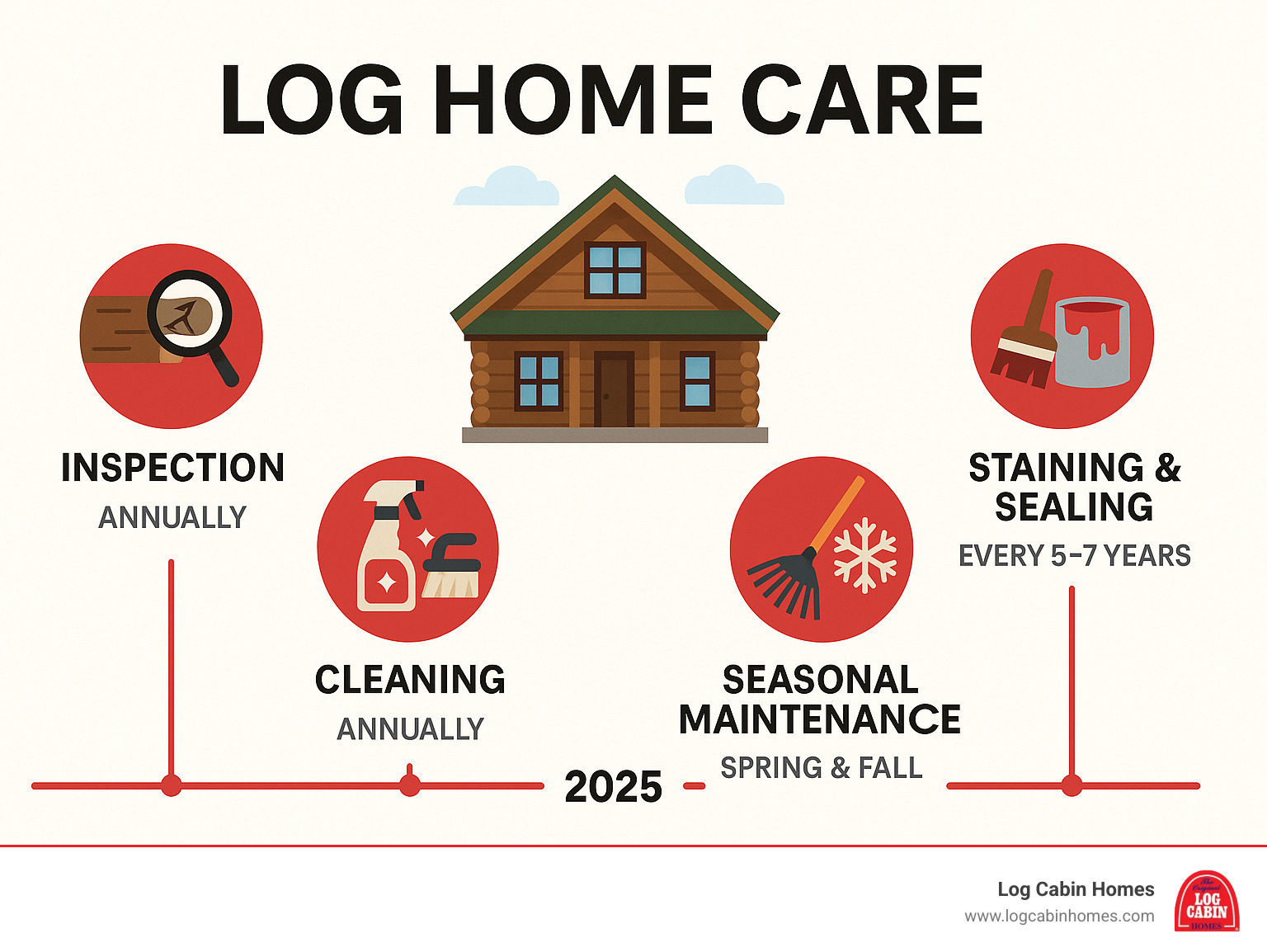
Log home care involves regular maintenance tasks that protect your wooden home from moisture, UV damage, insects, and natural wear. Here’s what effective log home care includes:
- Annual inspections – Check for cracks, water damage, and pest issues
- Exterior cleaning – Remove dirt, mold, and mildew with gentle soap solutions
- Staining and sealing – Apply protective coatings every 5-7 years
- Moisture management – Maintain proper drainage and ventilation
- Pest prevention – Use borate treatments and seal entry points
- Seasonal maintenance – Perform spring cleaning and fall winterization
Your log home is more than just a house – it’s a sanctuary that combines rustic charm with modern comfort. But unlike traditional homes, log structures face unique challenges. Wood naturally expands, contracts, and develops checks (cracks) as it ages. Without proper care, these beautiful homes can suffer from rot, pest damage, and costly structural issues.
Most log homes need re-staining every 5 to 7 years, but with consistent maintenance, some homeowners can extend this to 10 years. This means the right care routine can save you both time and money while preserving your home’s natural beauty.
Professional log home care services understand these challenges. They use specialized products like breathable stains, flexible chinking, and borate treatments that work with your home’s natural wood movement.
I’m Stephen Brumfield, a 25-year veteran of the log home industry and Vice President of The Original Log Cabin Homes, Ltd. My experience in log home care has taught me that the right maintenance approach can help your home last for generations while maintaining its rustic appeal.
What Goes in a Complete Log Home Care Kit?
Think of your log home care kit as your home’s first aid box – you hope you won’t need everything, but you’ll be grateful it’s there when you do. Having the right supplies on hand makes all the difference.
Your cleaning arsenal should start with a log wash concentrate that contains phosphoric acid to prevent surface growth. This isn’t your everyday household cleaner – it’s specifically formulated to work with wood’s natural pH levels. Pair this with a biodegradable cleaner for tackling mold and mildew, plus a soft-bristle brush that won’t scratch your logs. Don’t forget a low-pressure spray nozzle for rinsing – high pressure can actually drive water deeper into the wood grain.
When it comes to protection, breathable stain is your log home’s best friend. Unlike film-forming finishes that can trap moisture, breathable stains allow your logs to “breathe” while blocking UV rays. Add a clear topcoat for extra UV protection on sun-exposed walls. For gaps and cracks, you’ll need flexible chinking compound that moves with your logs, plus backer rod to create proper joint sealing depth.
Your borate treatment arsenal should include both rods and liquid concentrate. These naturally occurring minerals create an invisible shield against insects and rot – think of them as vitamins for your wood. A good pest repellent concentrate rounds out your defensive lineup, especially important for carpenter bees and other wood-boring insects.
The detective work requires a moisture meter to catch hidden dampness before it becomes visible damage. Don’t overlook your gutter tools – proper drainage is half the battle in log home maintenance.
Log Home Care 101: Why It Matters
Your log home is constantly moving – expanding in summer heat, contracting in winter cold, and shifting with every humidity change. This isn’t a flaw; it’s simply how wood behaves. The problem starts when we ignore this natural movement.
Annual inspection isn’t just a good idea – it’s essential insurance for your investment. Those hairline cracks that appear after your first winter? They’re called checks, and they’re completely normal. Left unsealed, though, they become highways for moisture infiltration.
Think of wood movement like breathing. Your logs need to expand and contract freely, but they also need protection from the elements. The right maintenance routine works with this natural process instead of fighting it.
Choosing the Right Log Home Care Service
Experience trumps everything when it comes to log home care services. Look for companies with at least two decades in the business – they’ve seen every possible challenge and know how to handle your home’s unique needs.
Surface prep separates the professionals from the pretenders. The best services use media blasting techniques specifically designed for log homes. They understand that cob blasting removes old finishes without damaging the wood underneath.
Watch for companies that invest in modern safety gear and diagnostic equipment. Thermal imaging can detect moisture problems hiding behind seemingly healthy logs. This technology spots potential rot areas, insulation gaps, and structural issues long before they become visible.
Log Home Care Essentials: Cleaning, Staining & Sealing
The heart of effective log home care revolves around three fundamental processes that work together like a well-orchestrated symphony. Think of cleaning as preparing the stage, staining as the main performance, and sealing as the protective finale that keeps everything in harmony.
Your washing process sets the foundation for everything that follows. Start by mixing your log cleaner according to the manufacturer’s directions. Apply the cleaner with a pump-up garden sprayer, working from bottom to top to prevent streaking. Let the cleaning solution work for 5-10 minutes, then gently scrub with a soft-bristle brush before rinsing thoroughly from top to bottom with low-pressure water.
Here’s where many homeowners make a costly mistake: they rush the drying process. Your logs need 2-3 warm, dry days to completely dry before you can move to the next step.
Stain selection requires understanding the difference between oil-based and water-based formulations. Oil-based stains penetrate deeper into the wood grain and typically last longer, requiring reapplication every 5-7 years. Water-based stains function more like breathable membranes, allowing trapped moisture to escape while blocking rain from getting in.
The color choice affects more than just appearance. Darker stain pigments provide better UV protection – essentially acting as sunscreen for your logs. Semi-transparent stains show off your wood’s natural grain but need refreshing every 3-5 years, while solid stains can last 7-10 years depending on your climate and sun exposure.
Never mix product lines when it comes to sealant compatibility. Using stains and topcoats from different manufacturers can lead to peeling, bubbling, or premature failure.
For comprehensive maintenance planning, our detailed maintenance plan guide provides season-by-season recommendations that keep your home looking its best year-round.
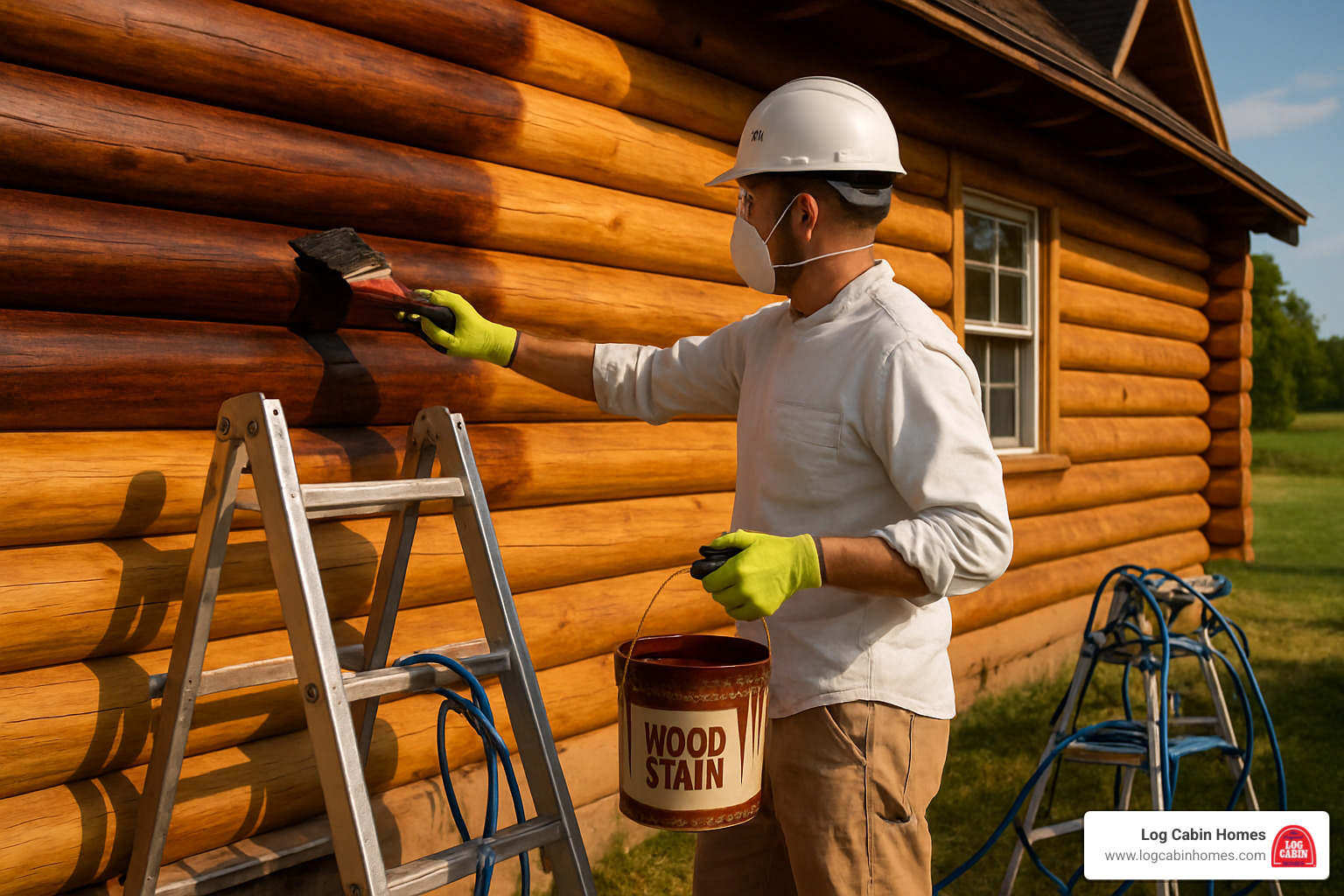
Clean Like a Pro
Professional cleaning starts with understanding what your logs really need. Use a gentle soap solution rather than harsh chemicals that can damage wood fibers. For mold removal, create a solution with 4 gallons of water, 1 cup of bleach, and 1 cup of TSP (trisodium phosphate).
Drying time is where patience becomes your best friend. Even when logs look dry on the surface, moisture trapped deeper in the wood can cause stain adhesion problems. Allow at least 48 hours of warm, dry weather before moving to the staining phase.
Mastering Log Home Care Staining Technique
The sprayer and back-brush method delivers the most even coverage and deepest penetration. Apply stain with an airless sprayer, then immediately follow with a natural bristle brush to work the stain into the wood grain.
Color boxing prevents the frustrating problem of color variations between stain batches. Mix all your stain containers together in a larger container, then redistribute into smaller containers for application.
The weather window can make or break your entire staining project. Apply stain when temperatures hover between 50-85°F with low humidity and no rain forecast for 24-48 hours.
Sealing the Deal
Caulking checks and gaps requires the right materials and a steady hand. Use flexible, UV-resistant caulk specifically designed for log homes. These specialized products remain flexible as your logs expand and contract with seasonal changes.
Backer rod use is the secret weapon that many DIYers overlook. Insert closed-cell foam backer rod into gaps larger than 1/4 inch before caulking. This creates the proper depth-to-width ratio for caulk adhesion.
Defending Your Logs: Moisture, UV & Pest Protection
Your log home faces three relentless enemies every day: moisture, UV radiation, and hungry pests. Think of these threats like a tag team constantly working to break down your beautiful logs. The good news? With the right defense strategy, you can keep them at bay for decades.
Moisture is the sneakiest villain. It creeps in through tiny cracks, pools around foundations, and loves to hide in places you can’t see. UV radiation acts like a slow-motion sandblaster, breaking down wood fibers and fading your stain. Pests – from carpenter bees to termites – see your logs as an all-you-can-eat buffet.
The secret to winning this battle is understanding that these threats often work together. Moisture weakens wood, making it easier for pests to move in. UV damage creates cracks where moisture can hide.
Roof overhangs are your first line of defense against both moisture and UV damage. Ideally, you want at least 18-24 inches of overhang to keep rain off your logs and provide natural shade.
Proper grading around your foundation directs water away from your logs before it can cause problems. Drainage rock and gutter guards keep water moving where it should go, while downspout extensions carry it at least six feet from your foundation.
For comprehensive information about moisture hazards and prevention, review the latest data on moisture hazards.
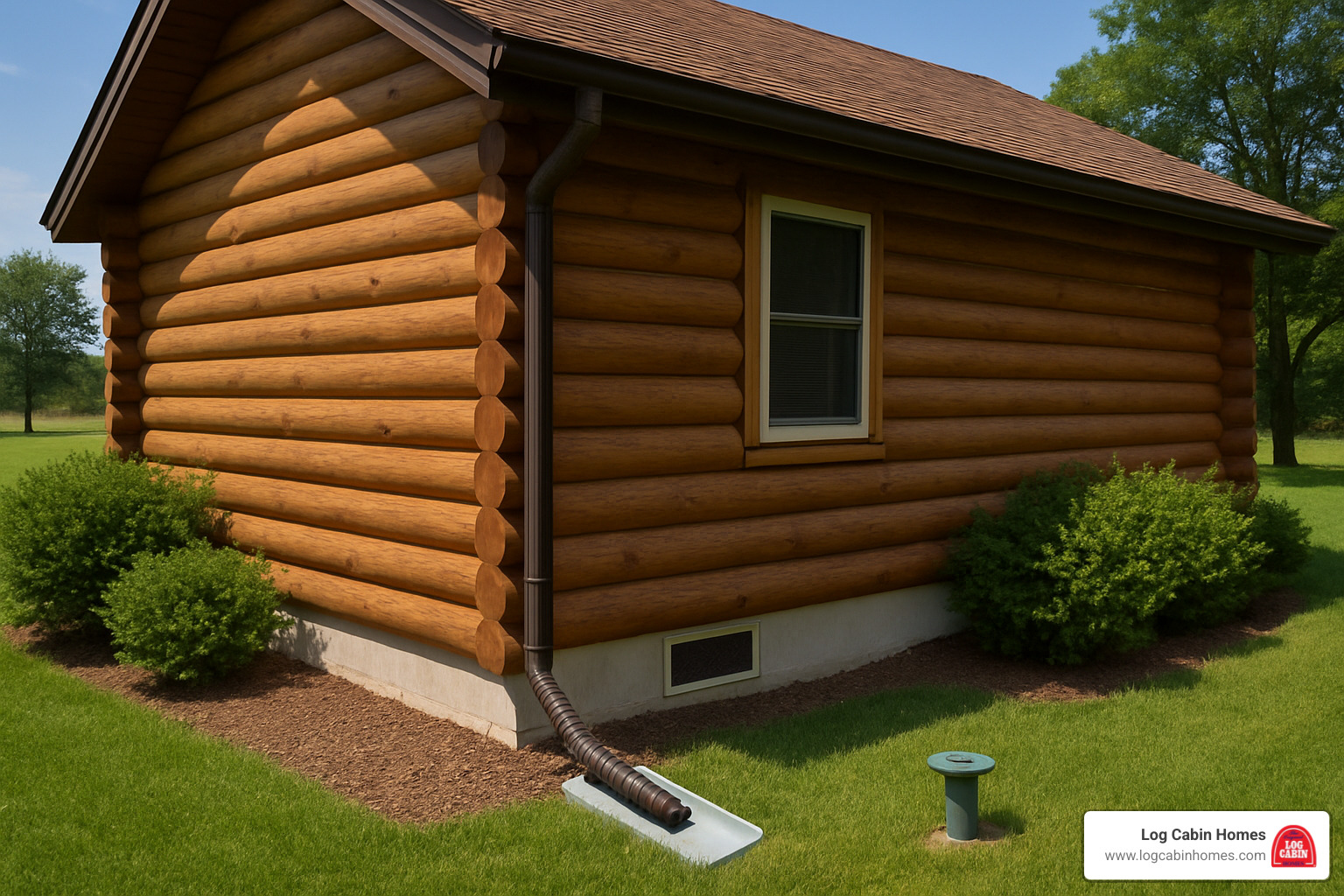
Moisture Control Toolkit
Splash blocks might look simple, but they’re moisture-fighting heroes. Position them to carry water at least six feet from your house, and make sure they’re properly sloped.
Soil build-up around foundations is surprisingly common and surprisingly dangerous. Maintain at least six inches of clearance between soil and wood – your logs need to breathe.
UV & Weather Shields
Pigmented stain is like sunscreen for your logs – and just like sunscreen, darker colors offer better protection. The pigments in stain absorb UV rays before they can break down wood fibers.
Clear topcoat touch-ups on south and west-facing walls can extend your stain life significantly. These areas get hammered by afternoon sun and benefit from annual attention.
Integrated Pest Management for Log Home Care
Borate treatments are your secret weapon against wood-boring insects and rot. Borate is a natural mineral that’s toxic to insects but safe for humans and pets. Borate rods inserted into logs provide long-term protection, while borate spray applications protect surface areas.
Screen vents and other openings prevent insects from setting up shop inside your home. Carpenter bees are particularly notorious for finding convenient entry points to establish nests.
Vegetation clearance around your logs serves triple duty – it improves air circulation, reduces moisture retention, and eliminates hiding places for pests. Keep grass, shrubs, and other vegetation at least 18 inches away from log walls.
Log Home Care Kits by Season
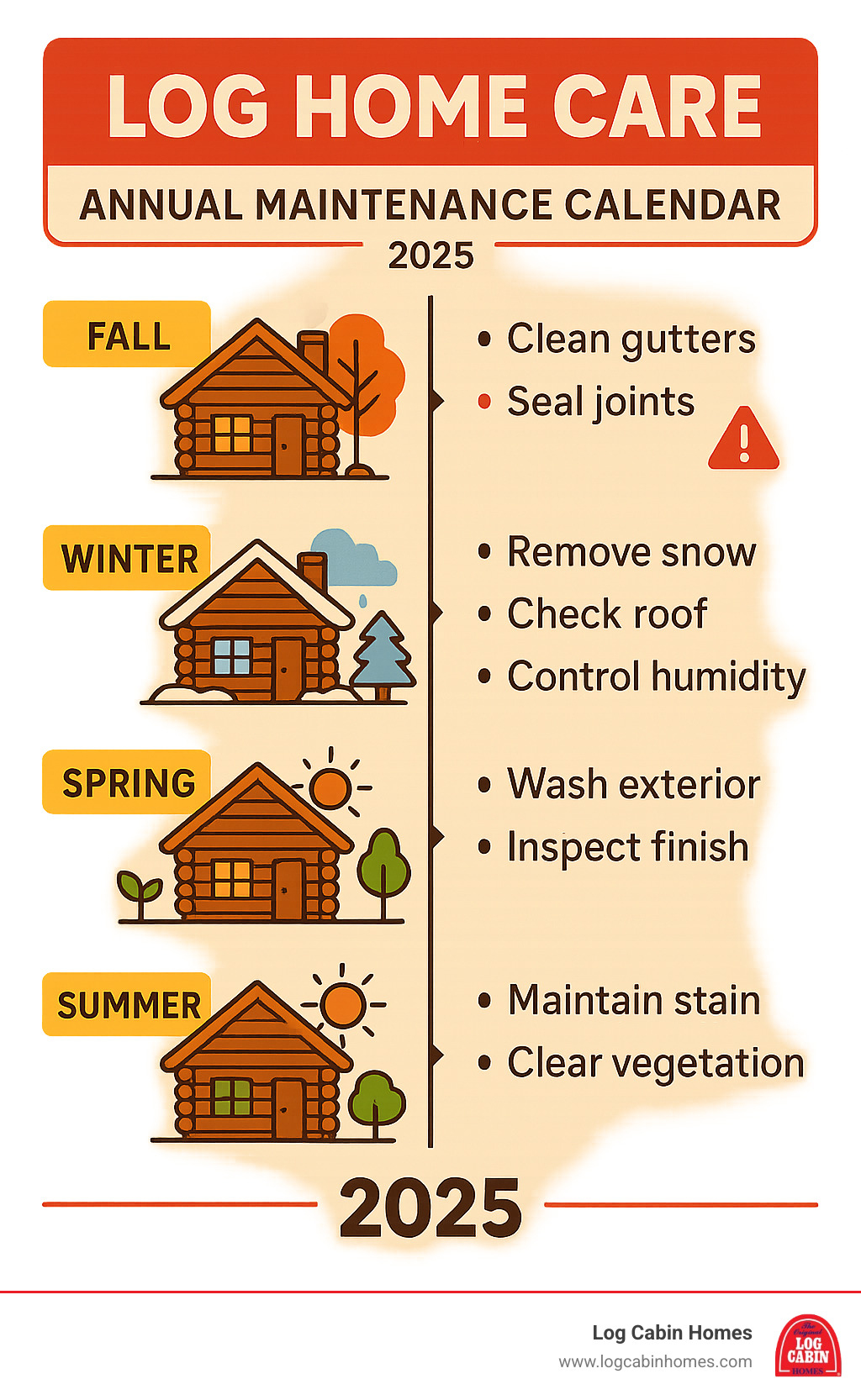
Your log home care needs change with the seasons, just like your wardrobe. Each season brings unique challenges that require specific tools and attention. Smart homeowners prepare seasonal kits that make maintenance easier and more effective.
Think of seasonal maintenance as your home’s health checkup routine. Spring is your annual physical, summer is active treatment time, fall is preparation for the tough months ahead, and winter is monitoring and protection mode.
Spring focuses on assessment and cleaning after winter’s harsh treatment. Summer is prime time for major projects like staining and sealing. Fall preparation protects your investment from winter weather, while winter monitoring helps you catch problems before they become expensive repairs.
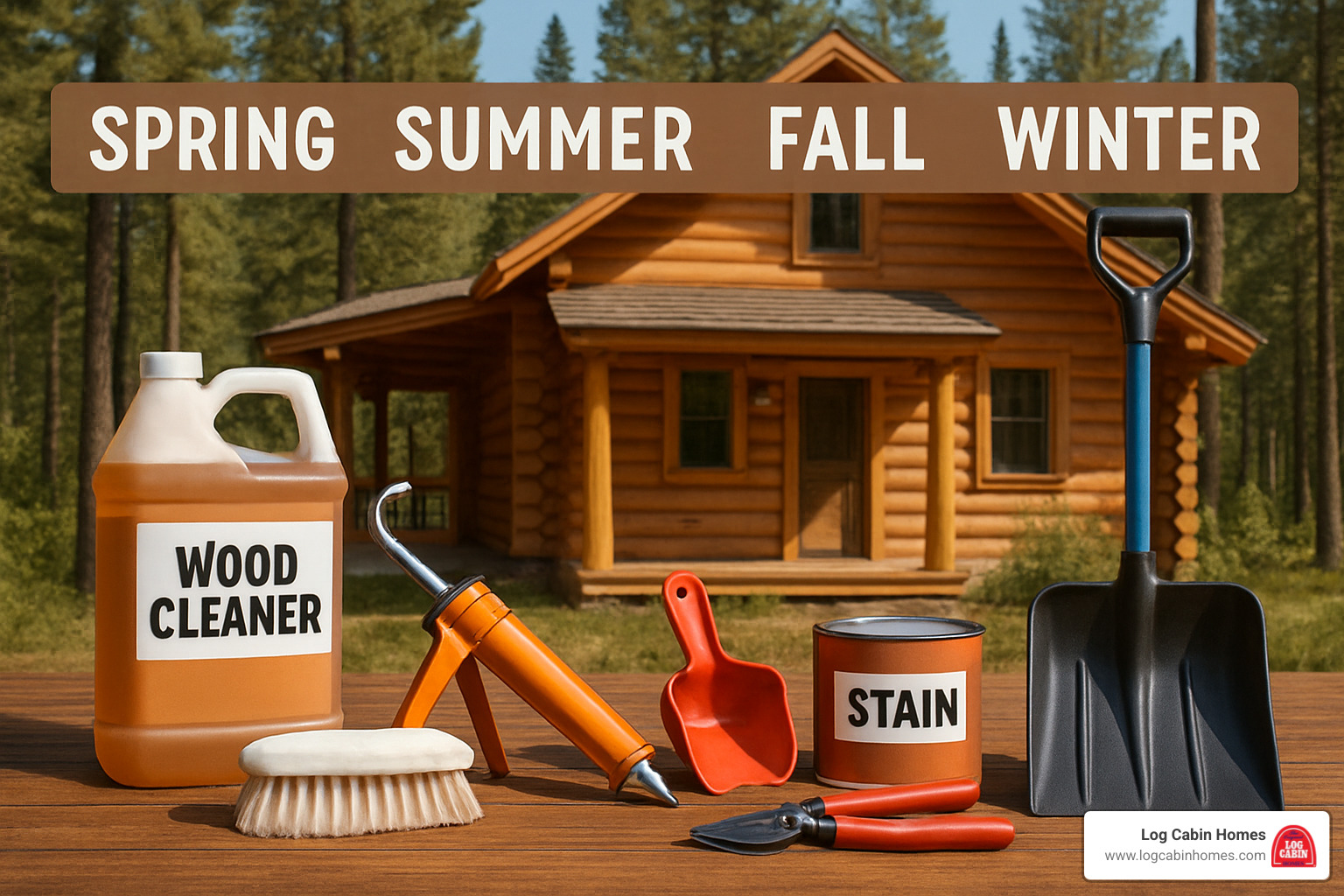
Spring Log Home Care Kit
Spring is like opening day for log home care – it’s time to see what winter left behind. Your spring kit should include wash concentrate for removing winter grime, mold cleaner for those shaded areas that stayed damp, and an inspection mirror for checking hard-to-reach spots.
Start with a slow walk around your home’s perimeter. Look for new cracks, loose chinking, water stains, or signs of pest activity. Pay special attention to areas where snow piled up or ice formed.
The water-beading test is your best friend during spring inspection. Spray water on various log surfaces – if it beads up and rolls off, your stain is still doing its job. If water soaks into the wood like a sponge, those areas need immediate attention.
Fall Log Home Care Kit
Fall maintenance is your home’s winter prep – like putting on a warm coat before heading into the cold. Your fall kit needs a gutter scoop for thorough cleaning, energy-seal caulk for weatherproofing, and quality weather-strip for doors and windows.
Gutter maintenance becomes critical in fall. Even small amounts of overflow can cause significant damage over winter months. Clean thoroughly and install or repair gutter guards to minimize debris accumulation from falling leaves.
Weather stripping around doors and windows deserves special attention. This simple maintenance task can dramatically improve your home’s energy efficiency and prevent drafts that stress your heating system.
Winter Readiness Kit
Winter preparation protects your home from ice, snow, and extreme temperature swings. Your winter kit should include a roof rake for snow removal, ice-dam guards for problem areas, and an indoor humidity monitor to prevent condensation issues.
Monitor indoor humidity levels between 30-50% throughout winter. Too much humidity creates condensation problems, while too little can cause excessive log shrinkage.
Inspect, Repair, Restore: When to Call the Pros
Every log home care enthusiast starts with good intentions – armed with a scrub brush and determination to tackle every maintenance task. But here’s the truth: some jobs are best left to the professionals. Knowing when to call in the experts can save you from costly mistakes and keep your log home in pristine condition.
Rot signs are the biggest red flag that screams “call the pros now!” When wood becomes soft and spongy, it’s not just a cosmetic issue – it’s a structural problem that can spread quickly if not addressed properly.
Structural settling is another area where professional expertise becomes invaluable. Log homes naturally settle over time, but excessive movement can indicate foundation issues or improper construction.
When your home needs media blasting prep, it’s definitely time to call the professionals. This process requires specialized equipment and safety protocols that most homeowners don’t have access to.
Replacement logs represent the most complex restoration challenge. Matching wood species, moisture content, and architectural details requires both craftsmanship and engineering knowledge.
Infrared diagnostics reveal hidden problems that aren’t visible during regular inspections. Thermal imaging can detect moisture infiltration, insulation gaps, and structural issues before they become expensive repairs.
| Service Type | DIY Suitable | Professional Recommended | Professional Required |
|---|---|---|---|
| Annual cleaning | Yes | For multi-story homes | – |
| Stain touch-ups | Yes | For color matching | – |
| Full re-staining | Possible | For best results | Multi-story/complex |
| Caulking repairs | Yes | For extensive work | – |
| Rot repair | Limited | For structural logs | Always |
| Media blasting | No | – | Always |
| Log replacement | No | – | Always |
For guidance on planning your home’s maintenance from the design phase, visit our maintenance design guide.
Spotting Trouble Early
The key to successful log home care lies in catching problems before they become major headaches. Water stains are like breadcrumbs leading to bigger issues – they tell a story about where moisture has been and where it might be heading next.
Don’t ignore those soft spots you might find during your routine inspections. Grab a screwdriver or awl and gently probe any suspicious areas. Healthy wood should feel firm and resist penetration.
Insect frass – a fancy term for bug droppings – provides valuable clues about pest activity. Carpenter bees leave perfectly round holes with telltale yellow staining around the entrance.
Professional Restoration Workflow
Professional restoration isn’t just about fixing what’s broken – it’s about creating a comprehensive solution that prevents future problems. The process starts with thorough assessment and documentation, including thermal imaging and moisture testing.
Finish removal comes next, typically involving media blasting or chemical stripping to completely remove old coatings. This step reveals the true condition of your logs and ensures proper adhesion of new protective finishes.
Log repair can range from simple epoxy fills for small defects to complete log replacement for severely damaged sections. Professional craftsmen know how to match wood species, grain patterns, and architectural details.
Annual service agreements provide ongoing protection and peace of mind. These programs typically include regular inspections, minor repairs, and priority scheduling for major work.
Frequently Asked Questions about Log Home Care
How often should I inspect and maintain my log home?
The secret to successful log home care lies in staying ahead of problems rather than reacting to them. I recommend performing visual inspections twice yearly – once in spring after winter’s harsh conditions, and again in fall before the cold weather returns.
Your spring inspection should focus on winter damage like new cracks, loose chinking, or water stains. Walk around your home slowly, looking up at the roof line and down at the foundation. Check gutters for debris and ensure downspouts are directing water away from your logs.
Fall inspections prepare your home for winter. Look for areas where stain might be failing or where small gaps need caulking before freezing temperatures arrive. This is also the perfect time to clean gutters and ensure your home is weatherproofed.
Professional inspections every 3-5 years provide the deep analysis that homeowners might miss. These comprehensive evaluations often include thermal imaging to detect hidden moisture problems and structural assessments that require specialized training.
The maintenance schedule depends on your home’s unique situation. Newer homes typically need more attention during their first few years as logs settle and adjust to local conditions. Homes in harsh climates or with significant sun exposure require more frequent monitoring than those in protected locations.
What is the best way to clean the exterior logs?
Gentle cleaning is the key to protecting your logs while removing dirt, mold, and mildew. Think of washing your logs like bathing a baby – you want to be thorough but never harsh enough to cause damage.
Start with a log wash solution specifically designed for wood homes. Mix according to manufacturer directions and apply with a pump-up garden sprayer. Work from bottom to top during application to prevent streaking, then rinse thoroughly from top to bottom with low-pressure water.
Never use high-pressure washing directly on logs – this is one of the most common mistakes homeowners make. High pressure can damage wood fibers, drive moisture deeper into the grain, and actually create more problems than it solves. A garden hose with a spray nozzle provides plenty of cleaning power when combined with the right products.
For stubborn mold and mildew, mix one cup of bleach and one cup of TSP (trisodium phosphate) in four gallons of water. Apply this solution with a soft-bristle brush, allow 10-15 minutes of contact time, then rinse thoroughly. The key is patience – let the cleaning solution do the work rather than scrubbing aggressively.
Always allow logs to dry completely before applying any stain or finish. Even if logs appear dry on the surface, moisture trapped in the wood can cause adhesion problems with new coatings.
How do I know when it’s time to re-stain or reseal?
The water-beading test is your best friend for determining stain condition. Simply spray water on various log surfaces around your home and watch what happens. If water beads up and rolls off like it would on a freshly waxed car, your stain is still doing its job.
However, if water soaks into the wood and causes immediate darkening, those areas need attention. This test is particularly important on south and west-facing walls, which receive the most UV exposure and typically need care first.
Visual signs are equally important indicators. Look for fading color, chalky appearance, or areas where the wood looks dry and weathered. These signs often appear gradually, so comparing photos from previous years can help you notice changes that develop slowly over time.
Don’t wait for widespread failure across your entire home. Spot treatments and touch-ups can extend the life of your existing finish significantly. Addressing problem areas early prevents the need for complete re-staining and saves both time and money.
Most log homes need major re-staining every 5-7 years, but consistent maintenance can extend this timeline to 10 years or more. The key is staying proactive rather than reactive – small investments in regular care prevent large restoration projects down the road.
Conclusion
Taking care of your log home isn’t just about maintenance – it’s about protecting a piece of your heart. Your log home care routine becomes the foundation that keeps your rustic retreat beautiful and strong for decades to come.
The secret to success lies in understanding that your log home has its own personality. Unlike stick-built houses, logs breathe, move, and change with the seasons. They need specialized attention that honors their natural characteristics while protecting them from the elements.
A proactive approach beats reactive repairs every time. Those small spring inspections and fall touch-ups prevent the headaches that come with major restoration projects. When you stay ahead of problems, you’re not just saving money – you’re preserving the character and charm that drew you to log home living in the first place.
Premium materials make all the difference in how your home weathers the years. Generic products from the hardware store might seem tempting, but they often lack the flexibility and breathability that logs need. Professional-grade stains, sealers, and treatments are formulated specifically for wood movement and climate challenges.
Single-source kits eliminate the guesswork about which products work together. When everything is designed to complement each other, you get better results and longer-lasting protection.
At Log Cabin Homes, we’ve been part of the log home family for decades. We understand the unique joys and challenges of log home ownership because we’ve helped thousands of families create their dream homes. Our expertise doesn’t end when your home is built – we’re here to support you through every season of ownership.
Your log home represents more than shelter – it’s your connection to simpler times and natural beauty. It’s where memories are made and traditions are born. With proper care, it becomes a legacy that can be passed down through generations.
The investment you make in log home care today pays dividends in comfort, beauty, and peace of mind tomorrow. Every hour spent on maintenance is an hour invested in preserving your slice of rustic paradise.
For comprehensive guidance on every aspect of log home maintenance, visit our ultimate maintenance guide. Your log home journey is just beginning, and we’re here to help you make it extraordinary.


