

Log Cabin Living Rooms That’ll Make You Want to Hibernate
Why Log Cabin Living Rooms Create the Perfect Retreat
A log cabin living room serves as the heart of rustic home design, combining natural materials with cozy comfort to create an inviting space that connects you to nature. These spaces feature exposed wood walls, stone fireplaces, and warm textiles that instantly make you feel welcome – as one design expert notes, “There is something about a log cabin that instantly makes you feel welcome.”
Essential elements of log cabin living room design:
- Natural Wood: Exposed log walls, cedar siding, or wood paneling
- Stone Fireplace: Central focal point with river rock or rustic stone
- Cozy Textiles: Plaid throws, wool rugs, and comfortable seating
- Large Windows: Picture windows that frame natural views
- Warm Lighting: Layered lighting from chandeliers to table lamps
The key to successful log cabin living room design lies in balancing rustic authenticity with modern comfort. You’ll want to address the unique scale of these spaces – log homes often have soaring ceilings and open layouts that require thoughtful furniture placement to avoid the “dollhouse furniture” effect.
Popular design approaches include:
- Contrasting dark wood with light-colored furniture
- Mixing handcrafted pieces with contemporary elements
- Using area rugs to define separate conversation zones
- Adding metal accents like wrought iron or copper details
I’m Stephen Brumfield, and with 25 years in the log home industry as Vice President of The Original Log Cabin Homes, I’ve helped countless families design their perfect log cabin living room spaces. My experience has shown me that the most successful designs focus on creating a cozy sanctuary that celebrates both natural materials and personal style.
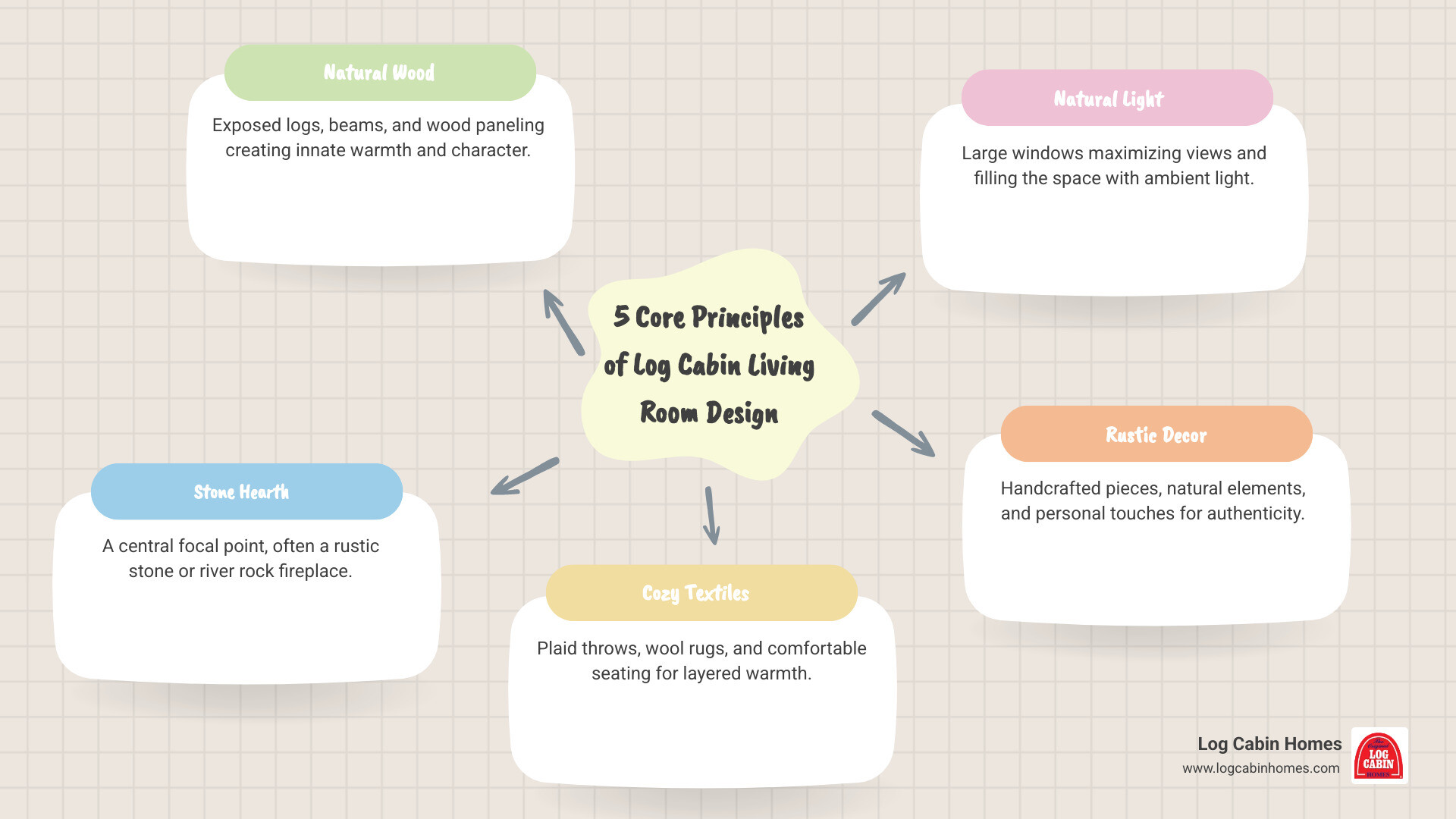
The Heart of the Home: Essential Elements of the Log Cabin Aesthetic
When we envision a log cabin living room, certain iconic features immediately come to mind. These elements are not just decorative; they are fundamental to creating that quintessential rustic and cozy atmosphere that makes a log cabin feel like a true retreat. It’s about celebrating nature and history within our living spaces.
At the core of the log cabin aesthetic is the abundant use of natural materials, particularly wood. Our homes are crafted from logs of different diameters, artistically prepared to form the very structure of the building. This includes the prominent log walls, often made from Eastern White Pine or Bald Cypress, which give the space its undeniable character. Beyond the walls, we often see exposed wooden beams and vaulted ceilings that soar overhead, creating a sense of grandeur and openness. These architectural features contribute to the innate warmth and organic beauty of the space.
The fireplace is arguably the most defining feature of any log cabin living room, serving as a natural gathering space and a true focal point. As we often say, “There is something about a log cabin that instantly makes you feel welcome. The crackling fire in the stone fireplace… instantly put you at ease.” Whether it’s a massive stone fireplace, perhaps with a river rock surround, or one with a raised hearth, its presence evokes comfort and tradition. It’s a place where we gather, share stories, and simply bask in the glow. We believe in embracing the warmth and advantages of a fireplace in your original log cabin home. You can learn more about accepting the warmth and advantages of a fireplace in your original log cabin home.
Beyond the warmth of the fire, the connection to the outdoors is paramount. Large windows are a common and crucial design feature in our log cabin living room designs. These aren’t just for letting in light; they are strategically placed picture windows designed to frame the breathtaking views outside, whether it’s a mountain vista, a snowy landscape, a dense forest, or a tranquil lake. These expansive windows maximize natural light, which is vital for brightening interiors that are rich in wood tones. They allow the beauty of the surrounding environment to become an integral part of the interior decor, blurring the lines between inside and out. The sheer volume of visual examples of log cabin living rooms available online, with over 20,000 results on image platforms, speaks to the popularity of these features.
Rustic Meets Refined: Modernizing Your Log Cabin Living Room
The beauty of a log cabin living room doesn’t mean you have to live in the past. Today’s homeowners want spaces that honor rustic traditions while embracing contemporary comfort and style. The secret lies in creating a perfect blend where timeless charm meets modern sensibility.
Think of it as giving your cabin a gentle makeover rather than a complete overhaul. You’re not abandoning the warmth and character that makes log homes special – you’re simply helping them shine brighter in today’s world.
The Power of Contrast
One of the most effective ways to modernize your log cabin living room is through thoughtful contrast. Those rich, dark wood walls that give your cabin its character can sometimes feel a bit heavy, almost absorbing light like a sponge. The solution? Balance them with lighter elements that create visual breathing room.
Picture your dark log walls paired with a crisp white sofa or cream-colored textiles. Consider adding a light plaster wash to certain surfaces or introducing furniture with clean, sculptural lines. This contrast doesn’t fight against your cabin’s natural beauty – it improves it by creating depth and visual interest.
Modern Materials and Finishes
Contemporary log cabin design accepts metal accents that add sophistication without losing rustic appeal. Black iron fixtures bring industrial elegance, while steel elements add sleek modernity. Copper accents introduce warmth with a refined twist that complements wood tones beautifully.
The key is choosing pieces that feel intentional rather than trendy. A sculptural coffee table or minimalist lighting fixture can transform your space while respecting its architectural heritage.
| Feature | Traditional Approach | Modern Approach |
|---|---|---|
| Color Palette | Dominated by deep browns, greens, and reds, reflecting natural outdoor tones. | Lighter and brighter, incorporating whites, creams, grays, and subtle pastels, often with pops of vibrant color through art or textiles. |
| Furniture | Heavy, oversized pieces often made of solid wood or distressed leather; antler decor and rustic hardware. | Clean-lined, sculptural pieces; a mix of materials like wood, metal, and lighter fabrics; comfort and function are key. |
| Lighting | Primarily ambient, often from large, rustic chandeliers (e.g., antler or wrought iron) and limited task lighting. | Layered lighting strategy with ambient, task, and accent lighting; modern fixtures (e.g., sleek pendants, track lighting) alongside warm, soft glows. |
| Materials | Raw, unfinished wood; heavy stone; natural fibers like wool and plaid. | Balanced use of wood (sometimes whitewashed or lighter tones), concrete, glass, and metal; plush textiles and modern patterns. |
Finding Your Balance
The magic happens when you mix old and new thoughtfully. A vintage leather chair might sit perfectly next to a contemporary side table. Traditional plaid patterns can share space with modern geometric designs. The goal is creating a space that feels collected over time rather than decorated all at once.
Modernizing doesn’t mean abandoning what makes your cabin special. It’s about enhancing those beloved features while making your space work better for how you actually live. Your log cabin living room should feel like home – comfortable, welcoming, and uniquely yours.
For deeper insights into achieving this perfect balance, explore our guide on rustic meets modern: the perfect blend in an original log cabin home. You might also find our discussion on light vs. dark colored wood in an original log cabin home helpful as you choose the perfect aesthetic for your space.
Furnishing Your Rustic Retreat: Decor, Lighting, and Layout
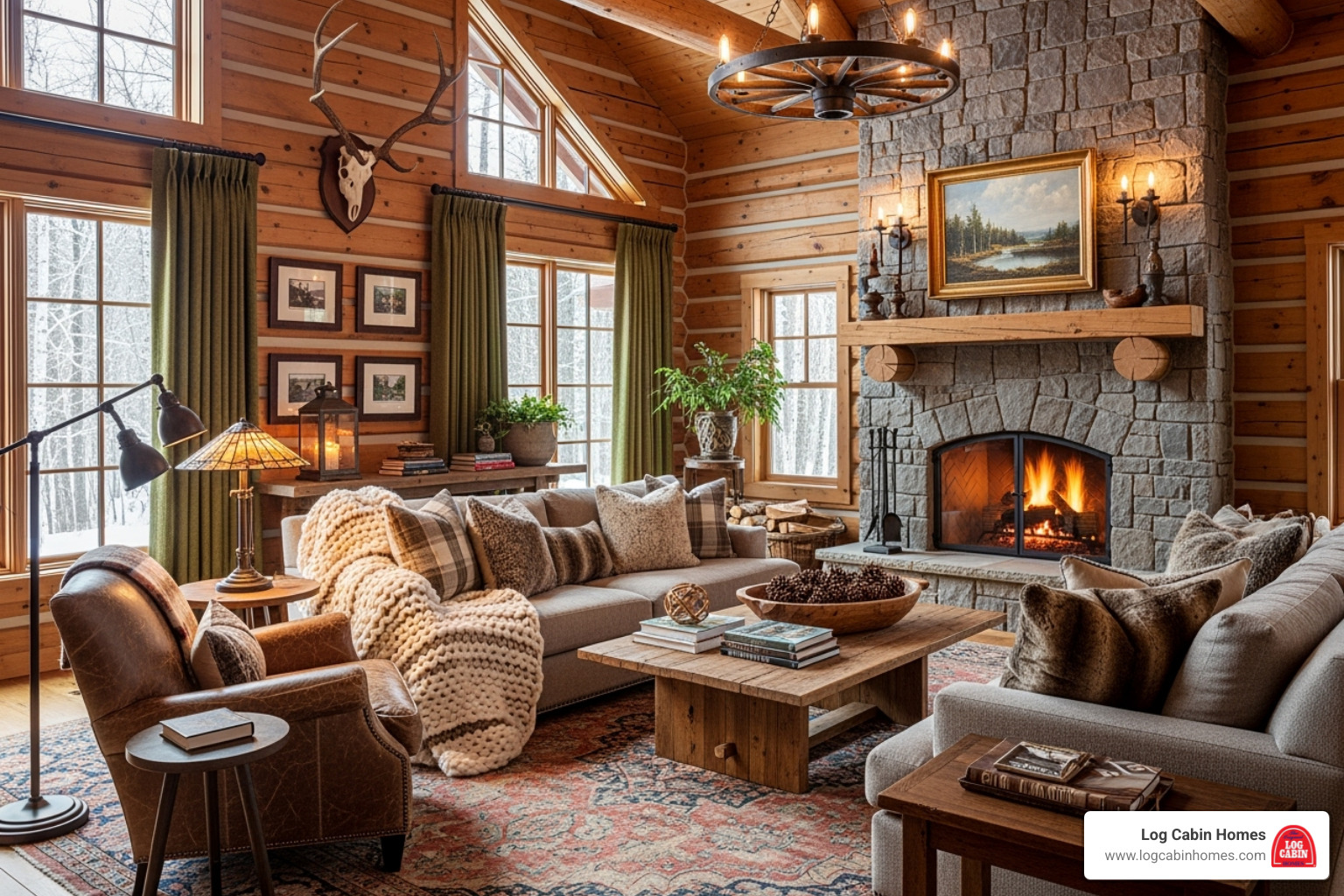
Creating the perfect log cabin living room is like composing a symphony – every piece needs to work together to create something beautiful. It’s not just about filling space with furniture; it’s about crafting an environment where you’ll want to spend your evenings reading by the fire or hosting friends for weekend gatherings.
Creating a Cozy and Functional Layout for your log cabin living room
The biggest mistake I see in log cabin living room design is what I call the “dollhouse furniture” syndrome. You walk into this magnificent space with soaring ceilings and expansive walls, and there’s a tiny sofa sitting in the middle looking completely overwhelmed. The scale of log homes demands thoughtful planning.
Think of your living room as having multiple personalities rather than one big, intimidating space. Creating separate furniture groupings transforms that grand room into intimate zones where conversations naturally happen. You might have your main gathering area anchored around the fireplace, a cozy reading nook by that picture window, and maybe a window seat where you can curl up with morning coffee.
Area rugs are your secret weapon here. They act like invisible boundaries, defining each space and giving your furniture a sense of belonging. A well-placed rug tells your sofa exactly where it should sit and creates that “room within a room” feeling that makes large spaces feel manageable and welcoming.
Choosing the Right Furniture and Textiles
Comfort should be your north star when selecting furniture for your log cabin living room. We’re not creating a museum here – we’re building a retreat where you actually want to live. Overstuffed sofas and deep leather armchairs invite you to sink in after a long day, and they’re built to handle real life without constant fussing.
The magic happens when you start layering textiles. Natural fabrics like wool, flannel, and linen feel right at home against those log walls. There’s something deeply satisfying about wrapping yourself in a plush throw while watching snow fall outside your windows. Faux fur draped over a chair back adds instant luxury, while plaid patterns nod to cabin tradition without feeling cliché.
Don’t be afraid to mix textures – a chunky knit blanket against smooth leather, a rough-hewn wooden coffee table topped with soft linen napkins. This layering creates visual interest and tactile pleasure that makes your space feel curated rather than catalog-perfect. For more inspiration on achieving this balance, explore our rustic elegance guide to decorating your log cabin home.
Illuminating Your Log Cabin Living Room
Lighting can make or break your log cabin living room. Those beautiful dark wood walls that give your space such character can also absorb light like a sponge, leaving you squinting at your book or straining to see faces across the room.
The solution is layered lighting that serves multiple purposes. Your ambient lighting sets the overall mood – think wrought-iron chandeliers or antler chandeliers that make a statement while providing general illumination. These dramatic fixtures also help break up those tall ceiling lines that can feel overwhelming.
Task lighting is where functionality meets comfort. Table lamps and floor lamps positioned near reading chairs or beside sofas ensure you can actually use your space after sunset. Wall sconces add accent lighting that highlights your favorite artwork or architectural features while creating pools of warm light.
The real game-changer is installing dimmer switches throughout your space. Being able to dial your lighting from bright and energizing to soft and romantic transforms your room’s personality with a simple twist. Learn more about creating the perfect ambiance through our guide on illuminating charm with light fixtures in your original log cabin home.
Adding Personal and Natural Touches
This is where your log cabin living room stops being just another pretty space and becomes uniquely yours. Handcrafted pieces tell stories – that reclaimed wood coffee table might have started life as barn siding, carrying decades of history into your home.
Nature provides the most authentic decorating elements. Pinecones arranged in a wooden bowl, branches in a tall vase, or antlers mounted thoughtfully on the wall bring the outdoors inside without looking forced. The key is restraint – a few well-chosen natural elements feel intentional, while too many can tip into theme park territory.
Landscape art that reflects your surrounding environment creates a visual conversation between inside and out. Woven wall hangings add texture and warmth while softening hard surfaces. For designers who excel at this natural integration, Leanne Ford Interiors offers inspiring examples of how to blend rustic and refined elements seamlessly.
Your personal collections – whether vintage quilts, family photographs, or pottery you’ve gathered from travels – are what make your space feel like home rather than a showroom. These elements, combined with thoughtful furniture placement and strategic lighting, create a log cabin living room that’s not just beautiful to look at but wonderful to live in. For additional inspiration on personalizing your walls, check out our wall decor ideas for your original log cabin home.
Frequently Asked Questions about Log Cabin Living Rooms
Over my 25 years in the log home industry, I’ve noticed that certain questions about log cabin living room design come up again and again. Let me share some insights that might help you create your perfect rustic retreat.
What colors look best in a log cabin living room?
The secret to choosing colors for a log cabin living room lies in working with, rather than against, those beautiful wood tones. I always tell our clients to think of their color palette as a supporting cast – the logs are your star performers.
Earthy tones and warm neutrals form the perfect foundation. Creams, beiges, and various shades of brown create a seamless flow with the natural wood, making the space feel cohesive and inviting. These colors don’t compete for attention; instead, they let the logs’ natural beauty shine through.
For something a bit more adventurous, sage green works wonderfully in log homes. It brings that subtle touch of nature indoors without overwhelming the space – almost like bringing in the forest canopy. When you want to add some personality, deep reds or navy blue can create stunning accent colors through textiles like plaid throws or decorative pillows.
The key is using color to improve rather than mask your cabin’s character. You can explore more about embracing classic log cabin living and exploring interior colors on our site.
How do you make a log cabin living room feel brighter?
Ah, the age-old challenge of brightening up those gorgeous but sometimes light-absorbing logs! This is probably the question I get asked most, and I have some tried-and-true solutions.
Light-colored textiles are your best friend here. White or cream sofas, rugs, and window treatments act like mirrors, bouncing light around the room instead of soaking it up. It’s amazing how much difference a cream-colored sectional can make against dark log walls.
Mirrors and metallic accents work like magic for multiplying light. A well-placed mirror can double the impact of your natural light, while copper or steel details add those light-catching sparkles throughout the space. Think of them as your room’s jewelry.
Your lighting strategy needs to be comprehensive. Don’t rely on just one overhead fixture – layer in table lamps, floor lamps, and wall sconces to eliminate dark corners. Dimmer switches let you adjust the mood from bright and energetic to soft and cozy.
For a more dramatic change, consider light-washing certain wood surfaces. While it’s a bigger project, applying a light wash or whitewash to some areas can completely change how bright your space feels.
Don’t forget about your windows – if privacy allows, leave them bare to maximize that gorgeous natural light. Choose furniture with lighter visual weight too – pieces with exposed legs or streamlined profiles help the room feel more open and airy.
How do you decorate log walls without putting holes in them?
I completely understand wanting to preserve those beautiful logs while still making the space your own. The good news is there are plenty of creative ways to add personality without reaching for the drill.
Freestanding furniture becomes your display system. Tall bookcases, neat consoles, or display cabinets can hold and showcase art, mirrors, and decorative pieces. You can lean larger artwork or mirrors against the wall on these surfaces, creating beautiful focal points with zero wall damage.
Leaning pieces directly on the floor creates that casual, collected-over-time look that feels so authentic in a cabin setting. A large landscape painting or rustic mirror propped against the logs can look absolutely stunning.
Lightweight textiles like tapestries, quilts, or woven wall hangings can be suspended from existing architectural features. Those exposed beams aren’t just beautiful – they’re functional display opportunities! Use simple clips or ties to hang soft pieces that add warmth and help absorb sound in your open space.
Your cabin already has built-in display areas – mantels, window sills, and any built-in shelving are perfect for showcasing smaller treasures, family photos, or those natural elements like pinecones and interesting branches.
For very lightweight items, adhesive hooks can work, but test them in a hidden spot first. Every log surface is different, and you want to make sure they won’t leave marks when removed.
The beauty of decorating a log cabin living room is that the walls themselves are already stunning. Sometimes the best approach is to let them be the star while you add personality through furniture, textiles, and carefully chosen accessories. For more creative ideas, check out our wall decor ideas for your original log cabin home.
Conclusion
Designing the perfect log cabin living room is more than just decorating a space – it’s about creating a warm sanctuary that captures the essence of rustic living while embracing your personal style. Throughout this guide, we’ve explored how the foundational elements of natural wood, stone hearths, cozy textiles, natural light, and rustic decor work together to create that unmistakable log cabin charm.
The beauty of a log cabin living room lies in its ability to balance rustic authenticity with modern comfort. Whether you’re drawn to the traditional approach with deep earth tones and heavy wooden furniture, or you prefer the contemporary blend of light colors and clean lines, the key is staying true to the natural materials that make these spaces special. Contrasting those rich wood tones with lighter elements can transform even the darkest space into a bright, welcoming retreat.
Your living room truly becomes the soul of the cabin when you thoughtfully consider every detail – from creating functional furniture groupings that address the grand scale of log homes to implementing a layered lighting strategy that banishes shadows and creates mood. The personal touches you add, whether it’s a collection of found natural objects or handcrafted pieces that tell your story, transform a house into a home.
At Log Cabin Homes, we understand that your log cabin living room serves as the heart of your rustic retreat. It’s where families gather around crackling fires, where guests feel instantly welcome, and where the stresses of the outside world simply melt away. Our expertise in designing and supplying premium log home packages means we’re here to help you craft these cozy retreats from the ground up.
Creating your perfect log cabin sanctuary is about more than following design rules – it’s about crafting a space that wraps you in warmth and connects you to the timeless appeal of natural living. For more inspiration on crafting cozy retreats and exploring the charm of the original log cabin home design, we’re here to guide you every step of the way.


